
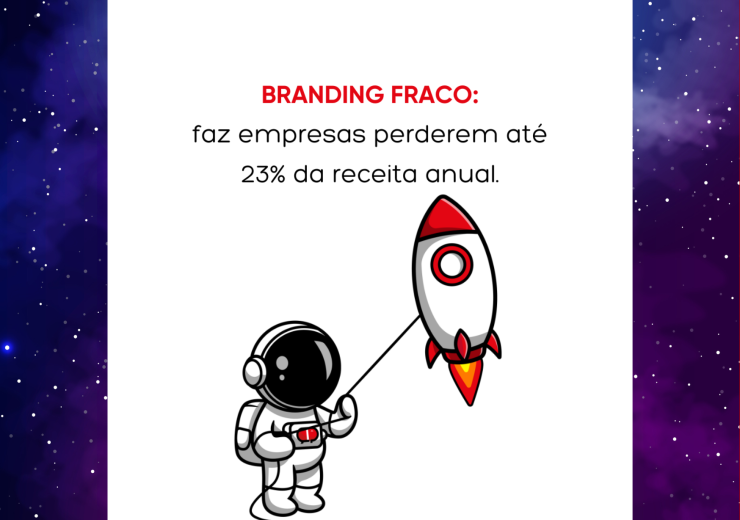
Weak branding is costly: companies lose up to 23% of revenue due to a lack of positioning.

A recent survey has revealed a fact that should alert any manager, entrepreneur or marketing professional:

Companies with poor branding lose, on average, up to 23% of their annual revenue.

That's right. Almost a quarter of your revenue could be going down the drain simply because your brand has no clear positioning, perceived differentiator or connection with the public.

Branding is not perfumery. It's a survival strategy.

According to the study, the perception of brand value has a direct impact on financial performance - influencing everything from purchasing decisions to customer loyalty.

In other words: it's not enough to offer a good product or service. If your brand doesn't build trust, doesn't convey authority and isn't remembered when people choose it, it will lose out to those who do it better.

And what's more, often with products that are even worse than yours.

What is weak branding?

Poor branding isn't just about having an outdated logo. In fact, it is:

  • Not having a clear value proposition
  • Talking to everyone and not connecting with anyone
  • Being generic, copied or forgettable
  • Not conveying security or coherence on the web
  • Change tone, color or speech with each campaign

It's the kind of communication that doesn't create a bond, doesn't arouse desire and doesn't build loyalty. And that costs a lot.

Strong brands sell more and spend less

A strong brand reduces the cost of customer acquisition (CAC), increases the average ticket, improves campaign performance and strengthens after-sales service.

More than that: it wins the war for attention without having to shout. Because the customer already knows who they are, what they deliver and why they should choose them.

Source: Terra

Read More

Connecting brands and people: the urgency of the new strategic marketing in 2025.

In 2025, it's no longer enough to have a good product or service - brands need to speak with relevance, connect with purpose and build identity - a strategy that goes beyond ads.

Many companies in Brazil still talk to themselves, missing out on opportunities because they don't deliver real relevance to the public.

What has changed in the branding game?

  1. Relevance is the new metric: Brands that communicate only with corporate language are ignored. In Brazil, the public is looking for authentic dialog - communication that listens and responds, not monologues.


  2. Real personas, not idealized personas: Branding needs to stop being fiction and become a mirror: getting to know the customer's real pains, habits, values and emotions.


  3. Presence in strategic channels: According to trend studies by Deloitte, brands that master personalization, automation and experience will have a competitive advantage.


  4. Creators as a channel of rapprochement: In Brazil, 61% of brands are already investing more in influencer marketing in 2025, recognizing the power of these creators to translate language and connect with their audience.


How can this vision be applied in practice?

  • Redefine your persona with real data, not assumptions.


  • Establish a tone of voice that is aligned with the audience, coherent and human.


  • Use channels with intent: networks, micro-influencers, cultural content.


  • Measure engagement beyond superficial metrics - what generates conversation or action?


  • Cultivate authenticity: stripping away superficial layers is the first step to connecting.


If your brand still speaks out of duty, it's time to make it speak for real. Here at Red Pill, we're ready to help you turn branding into human experience and strategy into results.

Source: Ketchum Brasil - "Why Are So Many Brands Still Talking to Themselves in Brazil in 2025"

Read More
en_USEnglish